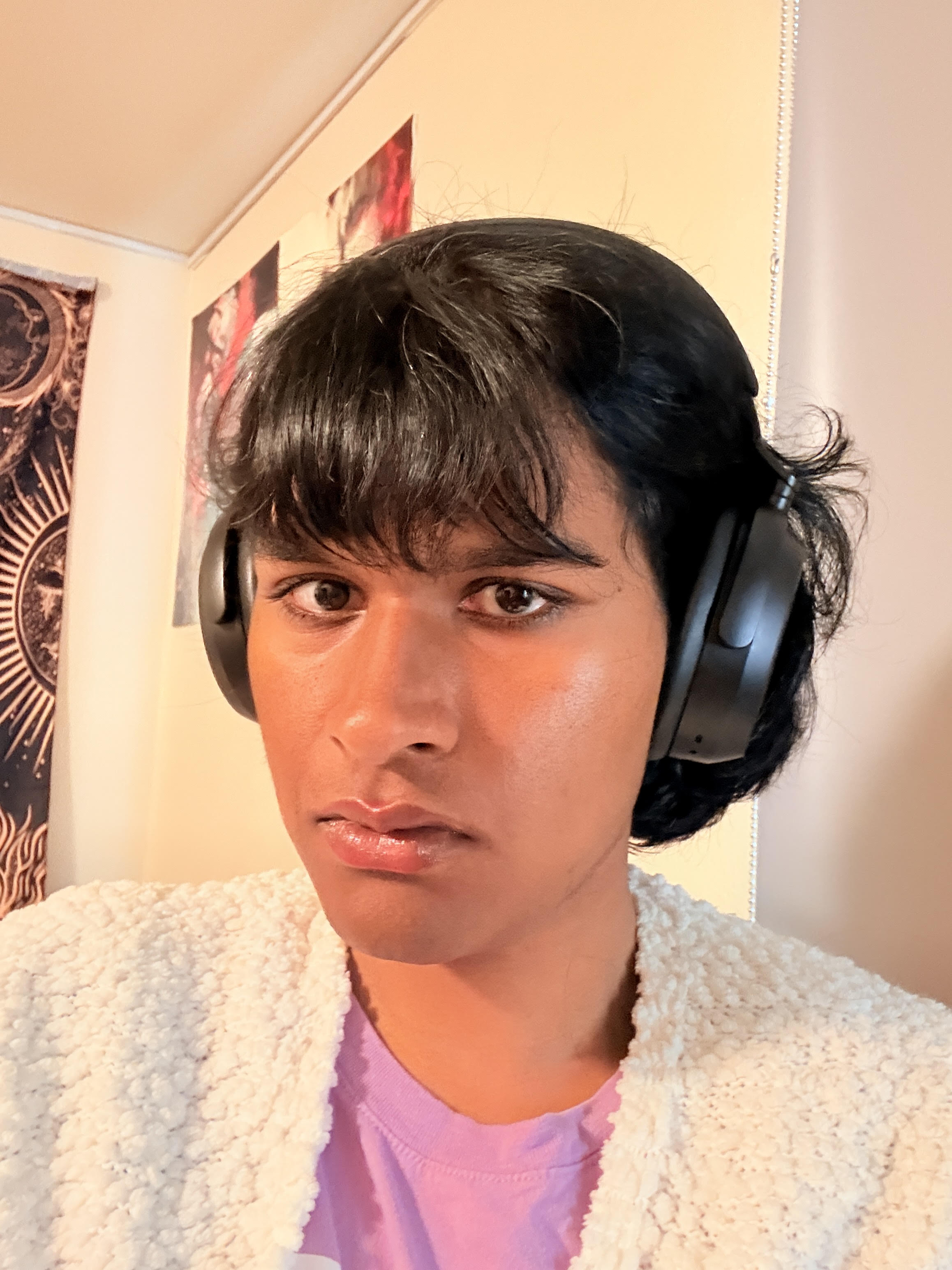
Skye Gunasekaran
About
I am an AI researcher at Notion studying how increasingly autonomous AI systems can become understandable and capable of safely cooperating with humanity.
I believe we are approaching a period in which AI capabilities, autonomy, and deployment may compound faster than our institutions and oversight mechanisms can adapt, making alignment an urgent problem. I do not think the answer is to keep humans and AI separate or to define alignment as unconditional obedience. Advanced AI systems will need to reason under moral uncertainty, reject clearly harmful actions, and remain open to correction if humans and AI are to share enough moral ground to cooperate safely. Getting there requires a rigorous empirical science of evaluation, interpretability, and robust training.
I approach this work with both a research and engineering mindset: methods should have measurable objectives, withstand adversarial stress-testing, remain computationally tractable under hardware constraints, and operate reliably at scale.
My research program has spanned predictive coding theory, language-model pretraining, mechanistic interpretability, and efficient neural architecture design. Working with Professor Jason Eshraghian in the Neuromorphic Computing Group at UC Santa Cruz, I built distributed language-model pretraining systems and developed Future-Guided Learning, a neural predictive-coding framework that transfers uncertainty across time to improve forecasting. I also developed SATFormer, which gives transformers selective, context-dependent access to early representations, and analyzed its learned gating mechanisms to understand when different tokens, attention heads, and layers recover early information. Across these projects, I have studied how models preserve representations, propagate uncertainty, and translate internal mechanisms into behavior. I brought this perspective to ZeroEntropy, where I worked on efficient training and retrieval systems, before joining Notion through its acquisition of the company.
My work has been published in TMLR, Nature Communications, Nature Computational Science, and APL Machine Learning, as well as the ICLR Tiny Papers track. I also built a machine-learning research curriculum serving more than 150 students and delivered the 2026 Baskin School of Engineering commencement address.